My Daughter Called Me Crying “Dad Come Get Me”… But Her Mother-in-Law Blocked the Door and Refused to Let Her Leave….
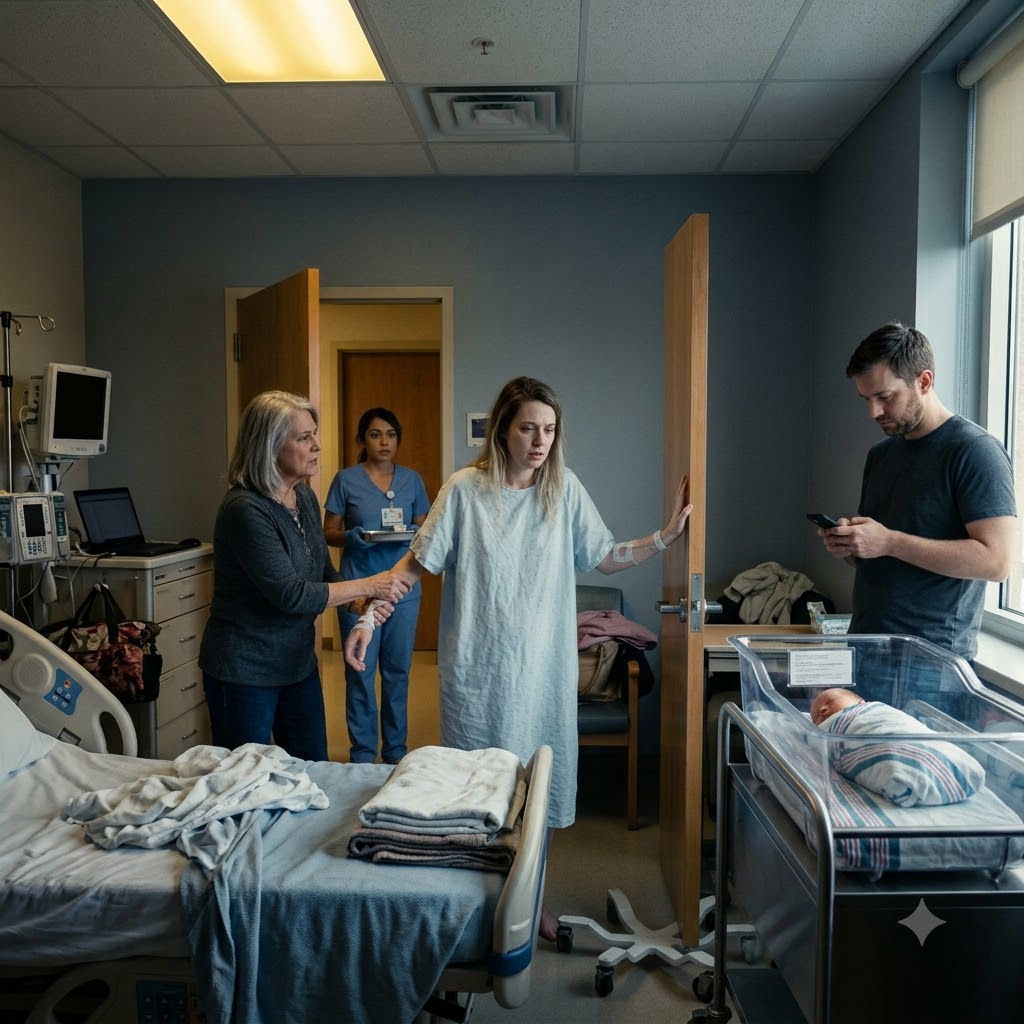
My daughter called me crying, “Dad, please come get me.” When I arrived at her in-laws’ house, her mother-in-law blocked the door and said, “She’s not leaving.” I pushed past her—and the moment I saw my daughter on the floor, I realized this wasn’t “family drama.” It was something they’d been hiding on purpose.
My daughter’s voice broke on the fourth word. “Dad, please come get me,” she whispered, and then the line went dead.
I drove the forty miles to the Mercer house in twenty-eight minutes, rain hammering the windshield hard enough to blur the road. Their home stood behind iron gates, all white stone and black windows, the kind of place built to impress strangers and frighten family.
Vivian Mercer opened the door before I knocked twice. My daughter’s mother-in-law wore pearls and a silk robe, her face tight with irritation.
“She’s not leaving,” she said coldly.
“Move,” I replied.
Vivian let out a sharp laugh. “You fix lawn mowers for a living, Daniel. Don’t come here pretending you have authority.”
I had heard that insult before. The Mercers always looked down on my small repair shop. They never asked what I did before opening it, and I never told them.
Behind her, something hit the floor with a crash.
I pushed past her.
My daughter, Emily, lay beside the dining table in a torn sweater, one cheek badly swollen, bruises ringing her wrists. A spilled glass of water sat near her hand. Her husband, Grant, stood over her holding a folder.
“She had a panic attack,” he said quickly.
Emily looked up at me and mouthed, *Don’t drink anything.*
That was the moment I stopped being a scared father and became the man I had spent twenty-three years learning to be.
I didn’t shout. I didn’t touch Grant. I took out my phone, started recording, and asked calmly, “Emily, did you ask to leave?”
“Yes.”
“Did anyone stop you?”
Grant stepped forward. “Turn that off.”
Emily’s father-in-law, Dr. Charles Mercer, appeared from the hallway. “She’s unstable. We’re trying to protect her.”
On the table, the folder lay open. I saw a power of attorney, a transfer authorization, and papers tied to the trust my late wife had created for Emily.
My blood ran cold. They hadn’t trapped her over an argument. They had trapped her because the trust was about to release its first major distribution in six days.
( End of Part 1 )
Read Part 2 of the story in the first comment below 👇👇👇
I knelt beside Emily and asked gently, “Can you stand, sweetheart?”
Grant blocked our path. “She signed documents. She’s staying until we finish this.”
I looked straight into the camera and spoke clearly for the record: “Grant Mercer has just admitted he is holding my daughter against her will to get financial signatures.”
For the first time, his confident smile vanished.
Vivian lunged for my phone. I stepped back and tapped the screen. The video was already uploading to a secure cloud.
“You think a video scares us?” Charles asked.
“No,” I said. “But the ambulance I called on the way here might.”
Blue lights flashed across the marble floors. While driving through the rain, I had dialed emergency services and left the line open.
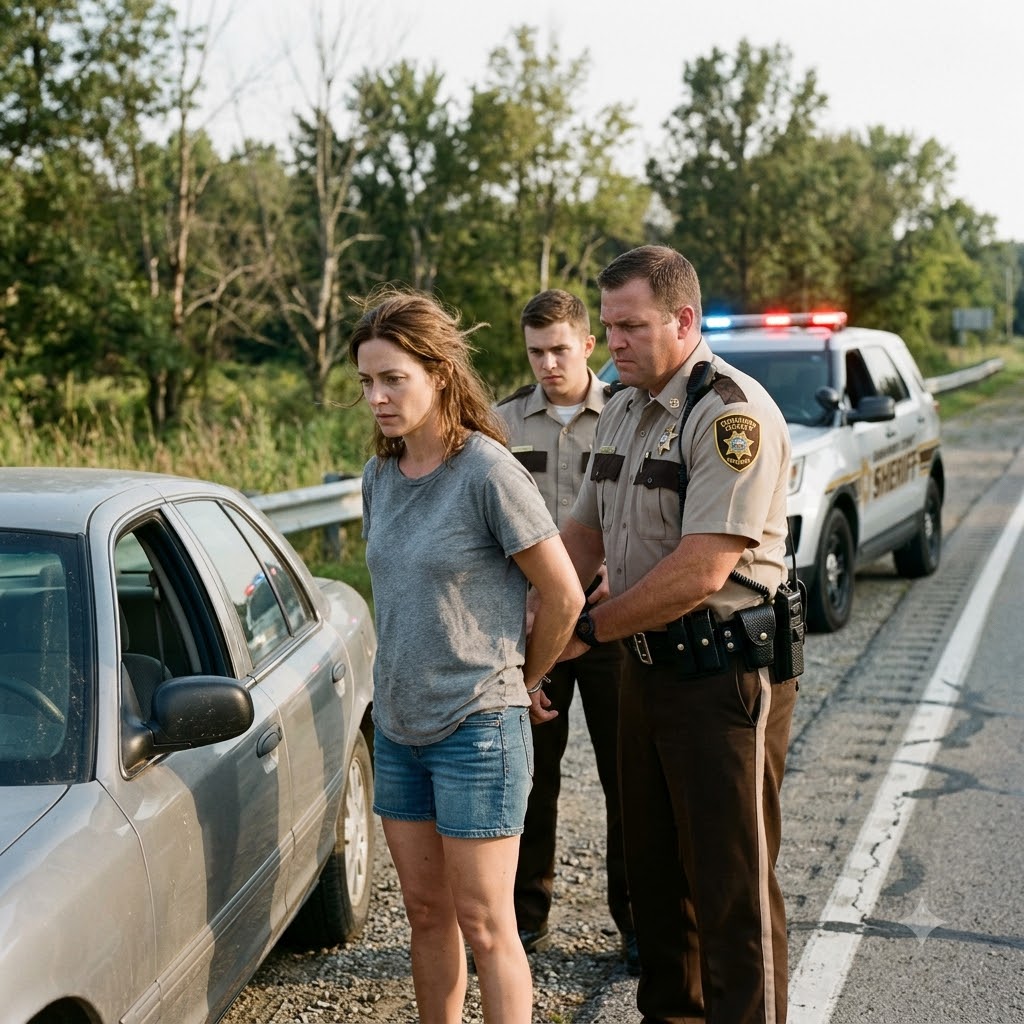
Paramedics entered with two sheriff’s deputies. Grant immediately switched to a soft, concerned voice. “My wife is confused. Her father has always been overly controlling.”
Vivian folded her arms. “Emily hurts herself when she wants attention.”
Emily tried to speak, but her words came out slurred. One paramedic checked her pupils, then carefully lifted the spilled glass. “What did she take?”
“Nothing,” Charles snapped.
The paramedic smelled the water. “We’re taking her to the hospital.”
When a deputy asked if anyone had prevented Emily from leaving, Grant pointed at me. “This man forced his way in. Arrest him.”
I raised both hands. “Gladly — but first preserve the dining room cameras, that folder, the glass, and the medication cabinet upstairs.”
Charles went pale.
Grant stared at me. “Who the hell are you?”
“Your father-in-law.”
That was all I gave him.
At the hospital, tests confirmed a powerful sedative in Emily’s system. She told the detective that Grant had hit her, taken her phone, and kept her locked inside for two days while Charles crushed pills into her drinks. Vivian had threatened to ruin her reputation by claiming she was mentally ill unless she signed over control of the trust.
The Mercers were ready with their defense. By morning, their lawyer produced fake messages showing Emily “begging” Grant to manage her money. Charles presented backdated medical notes. Vivian told neighbors I had stormed their home like a madman.
They were confident. They had money, status, and connections.
They didn’t know I used to run the state financial-crimes unit.
I had left that life after my wife died and opened the repair shop because engines were simpler than people. My old skills never left. Before I even walked through their door, I had activated location tracking, cloud backups, and sent everything to my former partner, now a deputy attorney general.
By noon we had more than enough. Emily’s phone backups proved the messages were typed from Grant’s laptop. The medical notes were forged. Bank records showed Vivian trying to open credit lines in Emily’s name. Security footage clearly showed Grant dragging Emily away from the front door.
Then the strongest evidence surfaced: the trust transfer papers carried my forged signature as co-trustee.
Unfortunately for them, I had built a silent security clause into the trust. Any attempt to transfer assets under duress would automatically freeze everything and notify the attorney general’s office.
Grant hadn’t just tried to steal money. He had handed us a full confession.
That evening, Vivian called offering a “deal.” If Emily dropped everything, they would “forgive” her and allow a quiet divorce. I put her on speaker while the investigators listened. She kept talking, thinking she was negotiating with a simple mechanic.
The next morning, the Mercers expected a private settlement meeting. Instead, they walked into the hospital conference room and found two state investigators, a prosecutor, Emily’s attorney, and me waiting.
Grant froze in the doorway. “This is harassment.”
“No,” Emily said from her wheelchair, her voice weak but steady. “This is the first time you can’t lock the door.”
Vivian recovered quickly and slid a settlement agreement across the table. “Sign this, Emily. We’ll say the bruises were from a fall. Your father avoids charges, and we all move on.”
I slid a tablet toward them instead.
The screen played Grant dragging Emily from the door. Then Charles carrying an unlabeled bottle into the dining room. Finally, Vivian’s own voice filled the room offering the bribe.
Charles lunged for the tablet.
The investigators stood up.
The prosecutor opened his folder. “Grant Mercer, you’re under arrest for unlawful imprisonment, aggravated assault, coercion, identity theft, and attempted financial exploitation. Dr. Charles Mercer, you’re under arrest for administering a controlled substance without consent, falsifying medical records, and conspiracy. Vivian Mercer, you’re under arrest for conspiracy, extortion, identity theft, and witness tampering.”
Vivian’s face crumpled. “Daniel, please stop this.”
I looked at the woman who had blocked the door while my daughter lay helpless on the floor.
“You mistook my silence for weakness.”
Grant turned desperately to Emily. “Tell them this is all a misunderstanding. I’m your husband.”
Emily removed her wedding ring and placed it on top of the settlement papers.
“You *were* my husband,” she said quietly. “Now you’re evidence.”
The case didn’t disappear into local favors. It went to state court. The sheriff who tried to slow-walk the warrant was investigated. Digital records proved months of planning. Faced with the overwhelming evidence, all three pleaded guilty.
Grant received nine years. Charles got seven and lost his medical license forever. Vivian received five years. A civil judgment forced the sale of their mansion, and the money covered Emily’s medical bills, legal fees, and damages.
Eight months later, Emily stood beside me outside a modest blue house with sunlight pouring across the porch. Her divorce was final. Therapy had brought her smile back. The trust remained safe, and she had started directing some funds to help other women escape dangerous situations.
I still fix engines. Emily sometimes brings coffee and sits by the open garage door.
One afternoon she asked, “Were you scared that night, Dad?”
“Terrified.”
“You didn’t look it.”
I tightened a bolt and smiled.
“Courage isn’t the absence of fear,” I said. “It’s opening the door anyway.”
Emily reached across the workbench and squeezed my hand. For the first time in years, she wasn’t apologizing for needing help. She finally understood that asking for it had saved her life.
And this time, no one stood in her way.