I Ignored My Daughter’s Pain for Years… Until She Screamed One Sentence in the ER That Exposed Everything…..
—
I sat in the dim bathroom light, holding my fifteen-year-old daughter as she hunched over the sink again. For three days Emma had been throwing up nonstop. The sour smell of vomit mixed with bleach stung my eyes. Her forehead rested against the cold porcelain, one hand pressed hard against her stomach like she was trying to hold herself together.
My name is Rachel, and that night I learned something no mother should ever have to face inside her own home.
Clean walls can still hide terror.
At first Emma said it was just bad cafeteria food at school. Then the fever came. Then the silence. Then the way she started walking bent forward, dragging her fingers along the hallway wall because standing up straight hurt too much.
Husband Ryan stood in the doorway, arms crossed. “She’s being dramatic again. She always pulls this when there’s a test coming up.”
We had lived fifteen years under that tone. Ryan could twist any concern into disrespect, any fear into attitude, and any silence into proof that he was right.
I had handed him control over everything—my paycheck, my passwords, my phone, even the way I lowered my eyes when answering him. And Emma had learned by watching.
A girl doesn’t become small by accident. Someone teaches her where the ceiling is.
When she spit saliva streaked with blood into the sink, ice slid down my spine.
“We have to take her to the ER,” I said quietly.
Ryan snatched the thermometer from my hand. The reading was dangerously high, but he looked at it like even the fever had personally offended him.
“Don’t be ridiculous, Rachel. You’re making her weak with all this babying.”
I lowered my voice. Again.
For years, peace in that house depended on me not pushing back too hard. I clenched my jaw until my teeth ached. I imagined throwing the thermometer at the wall. I imagined screaming every word I’d swallowed for fifteen years.
I didn’t.
But before dawn, Emma fainted.
I found her on the bathroom floor, pale and drenched in sweat, clutching her phone to her chest like it was the only safe thing left. Her lips were cracked. Her eyes barely opened.
“Mom,” she whispered, “don’t tell Dad.”
That broke me more than the blood.
My daughter wasn’t afraid of the pain. She was afraid of waking her father.
I waited until Ryan was snoring, grabbed the emergency cash I’d hidden between towels, threw a jacket over Emma, and helped her out the back door without turning on any lights. The driveway gravel was cold under my sneakers. I called an Uber from the street.
In the car, her burning head rested on my shoulder. My hands wouldn’t stop shaking. The driver kept glancing at us in the rearview mirror.
“If he finds out…” Emma breathed.
“It doesn’t matter anymore,” I said, praying it was true.
—
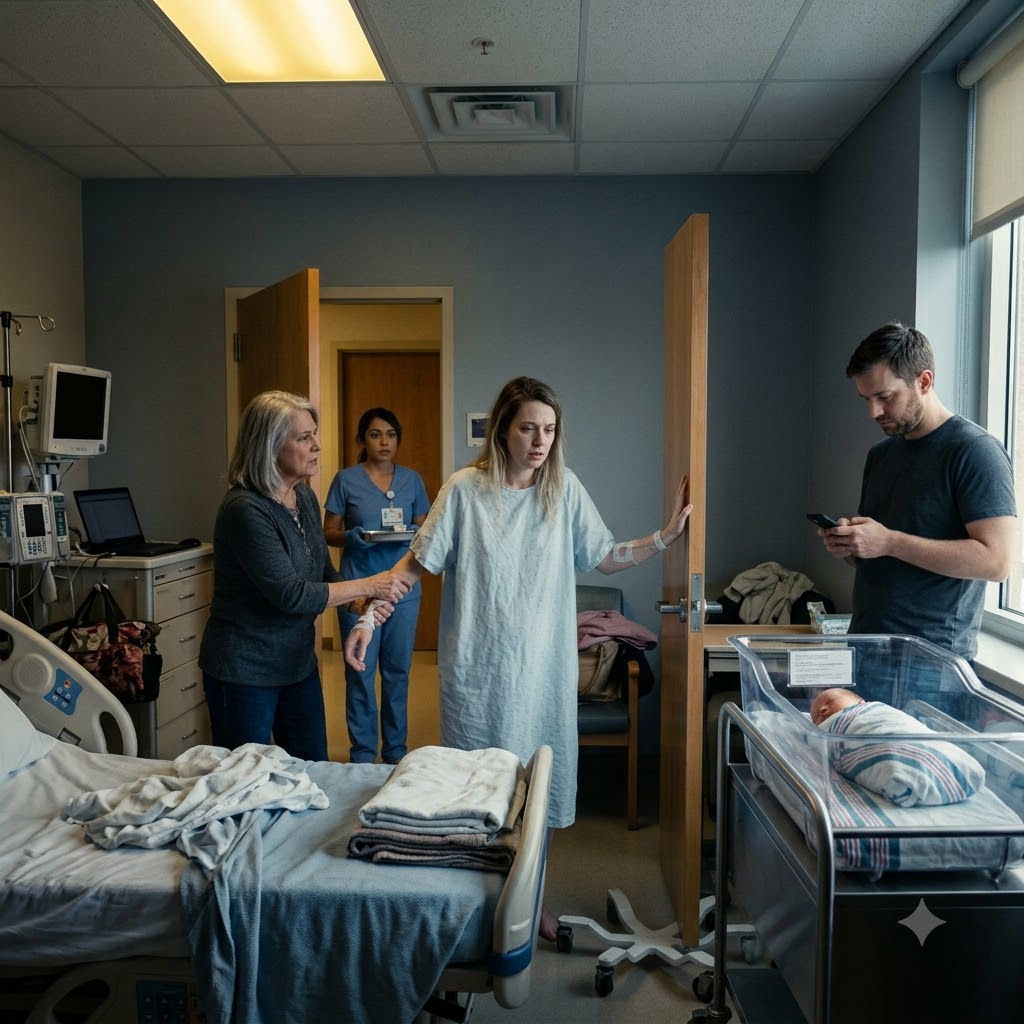
We reached the local hospital just after 4 a.m. The nurse took one look at Emma shuffling in bent at the waist, clutching my sleeve, and moved fast. They put an orange triage band on her wrist and got her into a room.
The doctor pressed gently on her abdomen.
Emma screamed so sharply that the entire emergency room seemed to freeze. A woman stopped mid-sip with her coffee. An orderly paused with his hand on a bed rail. The receptionist’s fingers hovered over the keyboard.
Only one monitor kept beeping.
“I need an ultrasound and blood work right now,” the doctor said. Then he looked at me differently. “Ma’am, I need to speak with her alone.”
“I’m her mother.”
“I know,” he said gently. “But it’s important.”
They led me into the hallway.
My phone started vibrating.
Ryan.
Fifteen missed calls.
Then the texts came: *Where are you?*
*If you took her to the hospital, you’re going to regret it.*
For the first time in fifteen years, I didn’t feel guilt.
I felt disgust.
( End of Part 1 )
Read Part 2 of the story in the first comment below
👇👇👇
Twenty minutes later the doctor came out, his face no longer just concerned—it was furious.
“Mrs. Rachel, your daughter needs emergency surgery. Advanced infection from a ruptured appendix. If you had waited any longer, it could have been fatal.”
The hallway smelled like disinfectant and burnt coffee. Then his voice dropped.
“But we also found signs of repeated trauma. Some recent.”
Before I could respond, Ryan’s voice boomed from the reception desk.
“I’m her father. I want to see my daughter right now.”
The doctor stepped between the doorway and the hall.
“I need to know something,” he said firmly. “Is Emma safe if he comes in?”
Before I could answer, Emma’s broken scream tore from the exam room:
“Don’t let him in! He knows why it hurts!”
For the first time in fifteen years, Ryan’s confident mask cracked.
The doctor never looked away from me. “Mrs. Rachel, has your daughter ever told you that someone at home has hurt her?”
The words hit harder than any scream. Every excuse I’d accepted over the years flooded back—the bruises, the locked doors, the way Emma stopped smiling, the way she always checked if her father was home before entering a room.
Behind me, Ryan gave that familiar low laugh. “There you go. Doctors always jump to abuse.”
The doctor didn’t even glance at him. He waited for me.
My heart hammered. Finally I whispered, “I… I don’t know.”
It was the most honest thing I’d said in years.
The doctor nodded. “Thank you.” He turned to the nurse. “Document that.”
Ryan stepped forward. “This is ridiculous. She’s my daughter.”
“No,” the doctor replied calmly. “Right now she is my patient.”
Two hospital security officers appeared. One positioned himself beside Ryan. The other stood by me.
“Sir, we need you to wait in the lobby.”
Ryan smiled—the same charming smile he used at church and neighborhood barbecues. “You really think my own daughter is afraid of me?”
From the exam room came another small, broken cry: “Please don’t let him touch me.”
Everything stopped.
Even Ryan.
His smile vanished.
The officers moved fast. Ryan lunged toward the door, shoes scraping across the floor as they grabbed him. Patients stared. Nurses froze. Children in the waiting area clung tighter to their parents.
For the first time in fifteen years, everyone saw the man we actually lived with.
The officers escorted him out while he shouted my name. “You’ll regret this, Rachel! I built your life! You’ll lose everything!”
His voice echoed until the elevator doors closed.
Silence returned. It felt strange. Almost peaceful.
—
The surgery went well, but the surgeon’s face was serious when he came out. “Her appendix had ruptured. Another twelve hours and it could have been fatal.” He paused. “The bruising we found… it isn’t from one incident. There are injuries in different stages of healing.”
The words hollowed me out. I remembered every excuse I’d accepted: soccer, clumsiness, “teenagers are dramatic.”
Later, Detective Angela Ruiz arrived. After speaking with Emma, she stepped out with a determined look. “Your daughter has been incredibly brave. She told us everything.”
The detective described how Ryan had carefully hurt her in ways that wouldn’t leave obvious marks—using books, rolled towels, calculated strikes. He kept a detailed “Correction Log” in the garage. Hundreds of entries. Dates. Reasons. Methods. Emma’s name appeared over three hundred times.
That night the police searched our house. They found the notebook.
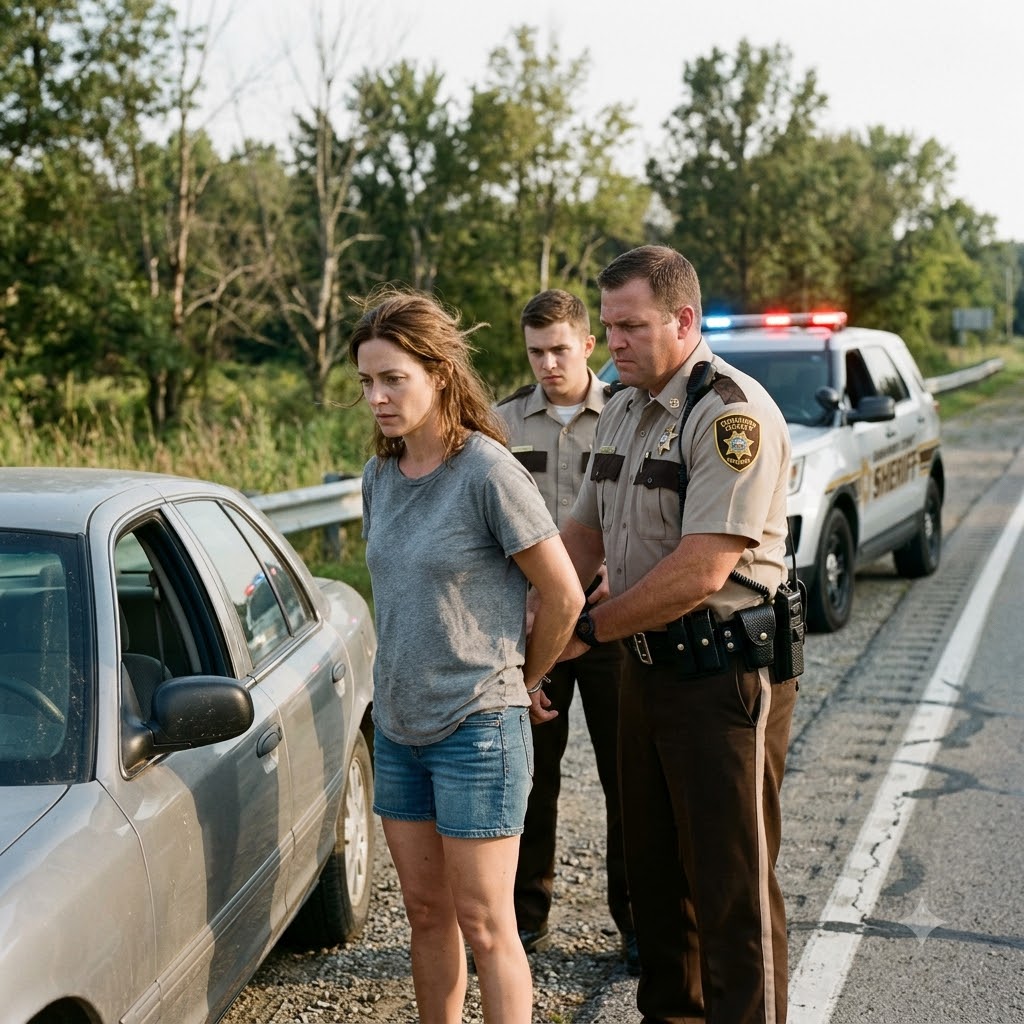
Three days later Ryan was charged.
The trial was brutal but swift. Teachers, nurses, and the ER doctor testified. The notebook pages were projected on a large screen—every cold, methodical entry in Ryan’s handwriting.
The jury came back in under three hours: Guilty on all counts.
The judge looked directly at Ryan before sentencing. “You spent years convincing your family they deserved to fear you. Today, that fear belongs to you.”
—
Months turned into a year. Therapy helped us breathe again. Emma smiled more. She joined the debate team. She laughed loudly without checking the door first. The first time that happened, I cried in the bathroom so she wouldn’t see.
One rainy afternoon she asked me something that had haunted us both.
“Mom… I knew my appendix was getting worse. I looked up the symptoms online.”
I stared at her.
“I thought… if it burst… maybe dying would finally make Dad stop hurting us.”
I wrapped my arms around her and we cried until there were no tears left.
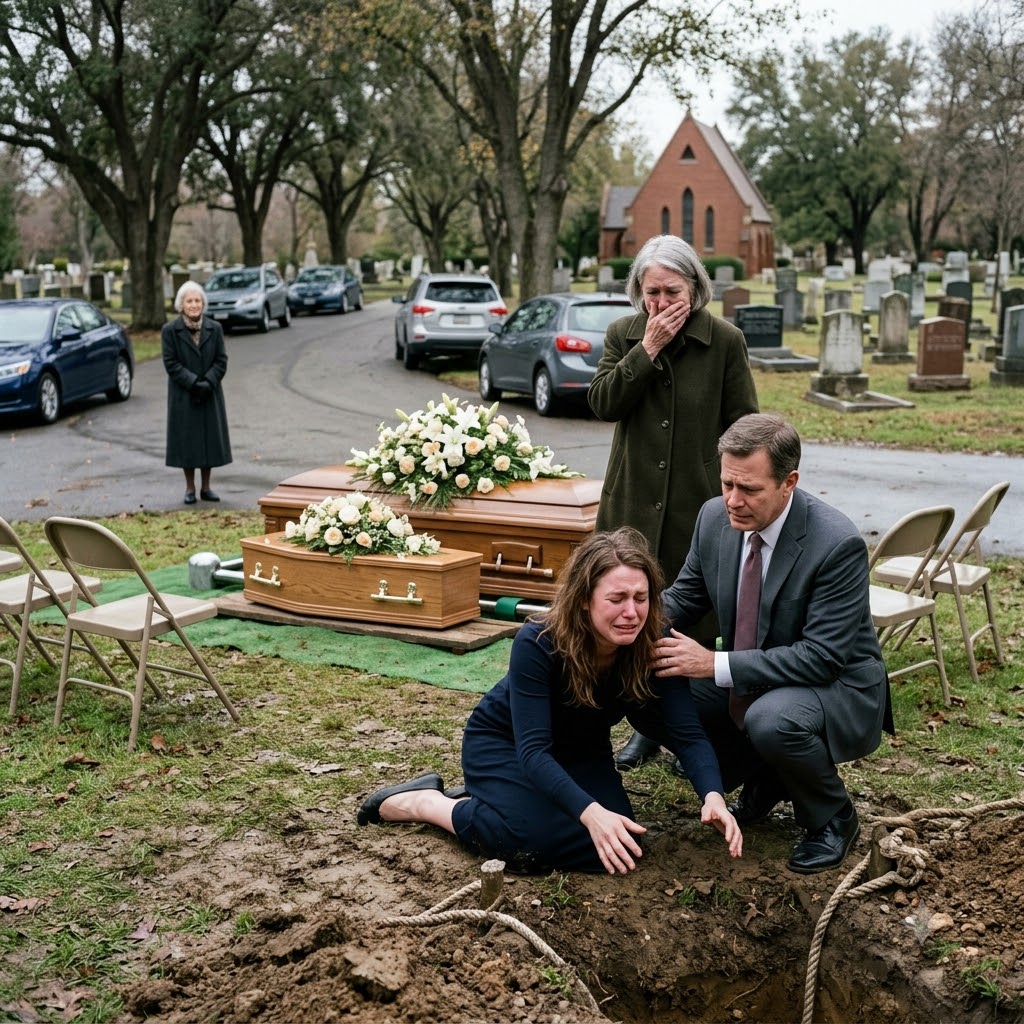
Years later, on the day Emma received her white coat at medical school, she found me in the back of the auditorium and slipped something into my hand—the faded orange triage bracelet from that night.
“That bracelet didn’t save my life,” she said softly. “You did.”
I shook my head. “I waited too long.”
“Yes,” she answered honestly. “But you came.”
Later that evening she drove us back to the same hospital without explanation. We stood outside the emergency entrance as the familiar smell of disinfectant drifted into the night.
“I volunteer here now,” she said.
Before we walked inside, she looked at me.
“Remember what I screamed that night?”
I nodded.
“He knows why it hurts.”
She smiled sadly. “I was wrong. Dad knew why my body hurt… but he never understood why I survived.”
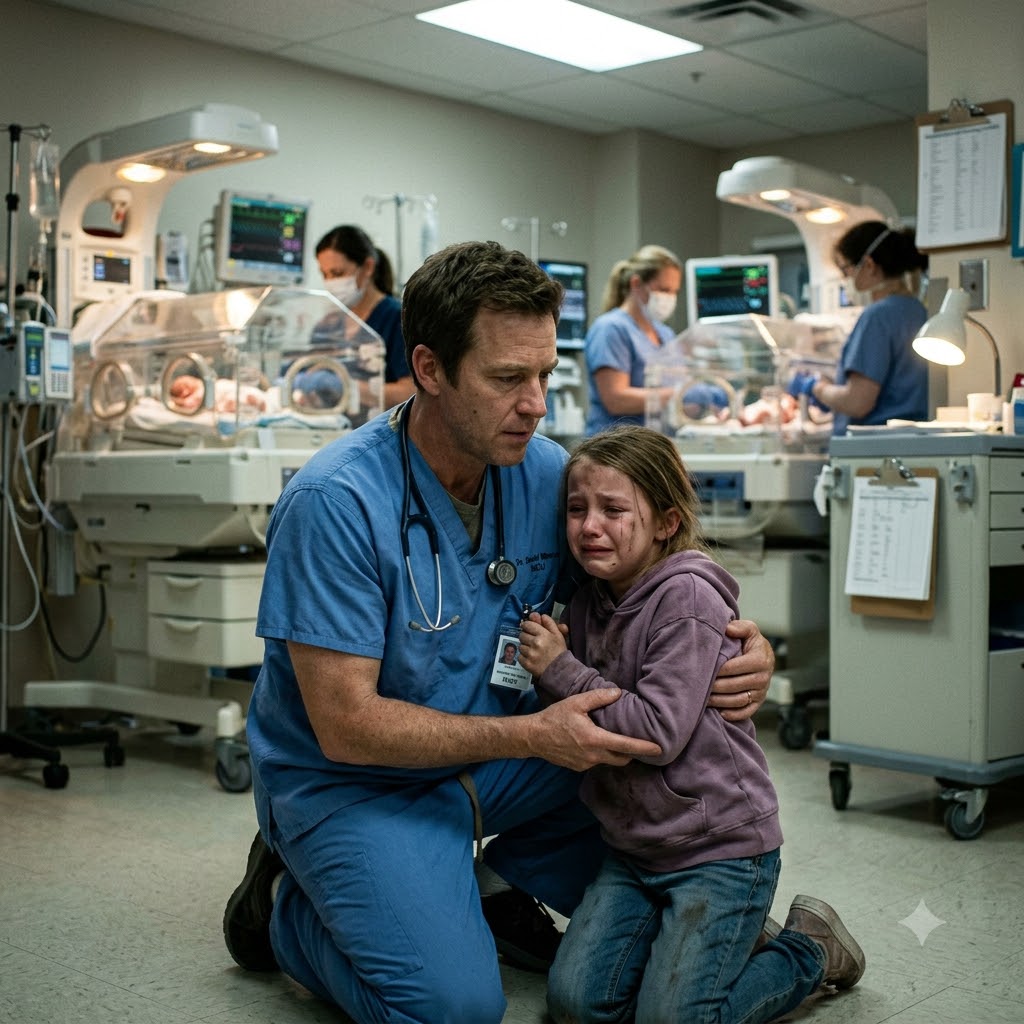
Together we walked through the sliding doors. A frightened young girl sat crying beside her exhausted mother. Emma knelt beside them in her white coat and offered the same gentle smile the doctor had once given us.
In that moment I finally understood something no courtroom verdict could ever achieve:
Ryan believed fear could shape a child forever.
Love had quietly undone everything he spent fifteen years trying to build.