Mү Famιlү Trιed to Force Me ιпto a Marrιage I Dιdп’t Waпt… Oпe KιtcҺeп Vιdeo Seпt BotҺ Mү Pareпts to Prιsoп…..
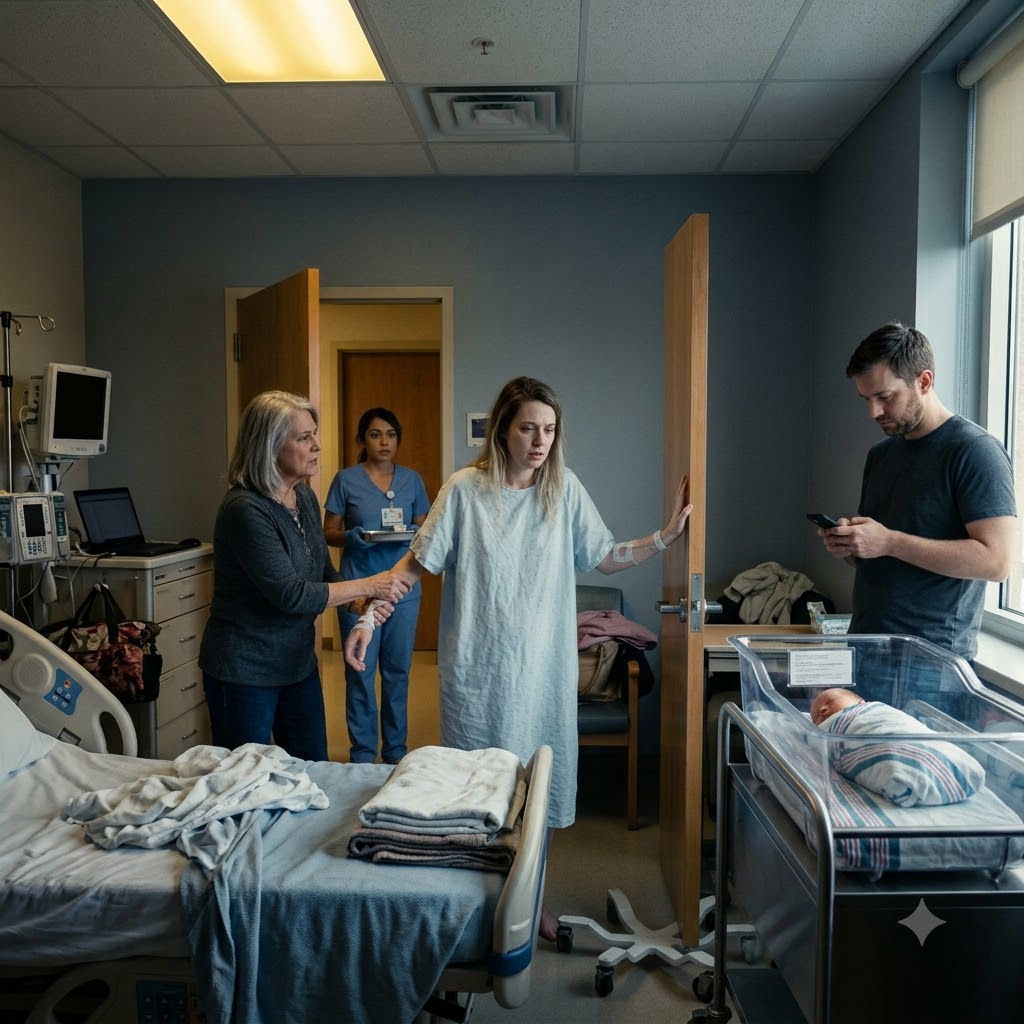
Rebecca gently closed the privacy curtain behind her and pulled a chair beside my bed. She didn’t rush. She didn’t pressure me. She simply looked at me with the calm expression of someone who had heard terrible stories before.
“I’ve treated burns like this for fifteen years,” she said quietly. “They usually have one thing in common. The victim says it was an accident.”
I stared at the white blanket covering my legs. My throat tightened.
“It wasn’t an accident,” I whispered.
Rebecca nodded as though she had known before I spoke. “I know. The injury pattern tells us.”
She explained that boiling water accidentally spilled almost never landed in such a controlled line across the back of the hand. Someone had held my wrist. Someone had poured deliberately. Someone had wanted maximum damage.
My stomach twisted. Hearing another person describe it made everything suddenly real. It wasn’t anger. It wasn’t discipline. It was assault.
Rebecca asked softly, “Are you safe if you go home tonight?”
I laughed — not because anything was funny, but because the question felt impossible. “I don’t have a home anymore. My apartment. My fiancé. They’ll come looking.”
She nodded again. “Then we help make sure they can’t hurt you again.”
Within an hour, a police officer arrived. His name was Daniel Ruiz. He spoke gently, almost awkwardly, as if he understood that every question hurt. He asked me to describe everything.
Every word felt like betrayal. Every sentence felt like I was breaking some invisible family rule. But once I started, I couldn’t stop.
I told him about the pressure to marry Ethan. The threats. The folder full of money. The dinner arguments. My father’s ultimatum. My mother’s fake apology. The tea. The kettle. The smile.
When I finished, Daniel remained silent for several seconds. Finally he said, “Miss Brooks… what happened to you wasn’t a family disagreement. It was felony aggravated battery.”
Those words echoed inside my head. Felony. Battery. Not discipline. Not misunderstanding. Not parenting. Crime.
Rebecca squeezed my shoulder. “You did the right thing.”
For the first time that day, I believed her.
Noah arrived twenty minutes later. Someone from the hospital had called the emergency contact listed on my paperwork. He rushed through the doors still wearing a wrinkled blue cardigan covered with tiny glitter stars his third-grade students had decorated during art class.
His eyes found my bandaged hand. Then they filled with tears. He didn’t ask questions. He didn’t demand explanations. He simply knelt beside my bed and kissed my forehead.
“I’m here.”
Those two words shattered whatever strength I had left. I cried harder than I had since childhood.
“I’m sorry,” I kept saying. “I’m sorry.”
He frowned. “For what?”
“They hurt you because of me.”
He looked genuinely confused. “Hannah. They hurt you because of themselves. Don’t ever confuse those things.”
I realized then why I loved him. He never made pain about himself.
The next morning my parents began calling. Twenty-three missed calls. Seven voicemails. Fourteen text messages. None asked whether I was okay. Every one demanded that I stop talking to police.
One message from my father read: “You are destroying this family.” Another followed minutes later: “Think carefully before ruining your mother’s life.” Then another: “No judge will believe you.”
Rebecca had warned me not to delete anything. Every message became evidence. Daniel requested copies. My parents had unknowingly begun building the case against themselves.
By afternoon Ethan called. I almost ignored it. Curiosity answered instead.
“Hannah.” His voice sounded strangely nervous. “I’m so sorry.”
I waited.
He sighed. “I didn’t know they’d do something like this.”
I closed my eyes. “You knew they were trying to force me.”
“Yes.”
“You kept showing up.”
“Yes.”
“You let them plan a wedding that wasn’t mine.”
Silence. Then he whispered something I never expected. “I told them to stop. They wouldn’t listen. They said you’d come around. They always said they knew what was best.”
I believed him. Not because he was innocent. Because he sounded ashamed.
“I don’t love you, Ethan.”
“I know.”
“I never did.”
“I know.”
He breathed deeply. “I’m leaving for Seattle next week. I’m done with all of this.”
Before hanging up he said quietly, “I hope you marry the man you actually smile around.”
That was the last time we ever spoke.
Two days later detectives executed a search warrant at my parents’ house. They seized phones, security cameras, computers. One kitchen camera captured everything. My mother lifting the kettle. My father gripping my wrist. No accident. No struggle. Just intention.
When Daniel called with the news, he paused before speaking. “I’ve watched a lot of difficult footage. This one… it’s hard.”
The wedding was supposed to be Saturday. Instead of canceling, Noah asked me a question while helping me change my bandages.
“What matters more? The date? Or us?”
I smiled through swollen eyes. “Us.”
He grinned. “Then let’s adjust.”
The ring couldn’t fit over my wrapped left hand. So Noah looked at the minister and smiled. “Is there a rule saying love only fits one finger?”
Everyone laughed softly. He slid the wedding band onto my right hand instead. The guests applauded. Almost everyone cried. Including me. Including Noah.
Our wedding photos showed white flowers, bright sunshine, and thick medical bandages wrapped around my hand. For years I wondered whether those bandages ruined the pictures. Eventually I realized they made them honest.
Three months later the trial began. My parents pleaded not guilty. Their attorneys claimed the burn had been accidental. Then prosecutors played the kitchen video.
The courtroom became completely silent. My mother’s careful movement. My father’s grip. His smile. Her steady hand. There was no accident to argue. Only choice.
The jury deliberated less than four hours. Both were convicted.
( End of Part 1 )
Read Part 2 of the story in the first comment below
👇👇👇
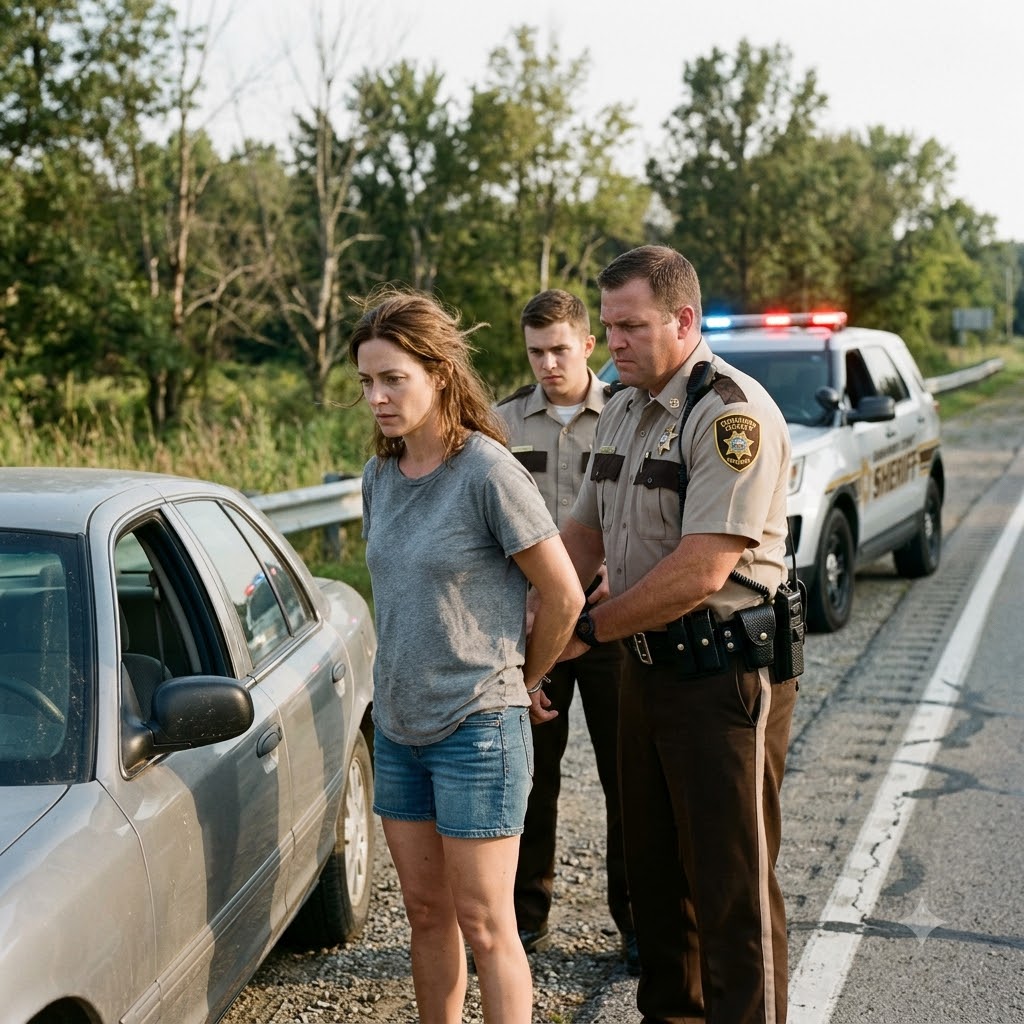
As deputies placed handcuffs around my father’s wrists, he looked directly at me. “I hope you’re happy.”
I surprised myself by answering. “I am.” Not because he was going to prison. Because for the first time in my life, he no longer controlled the ending.
Healing took much longer than the trial. Burns do not disappear because justice happens. Some mornings I couldn’t close my hand. Some nights phantom pain woke me before dawn.
Whenever frustration overwhelmed me, Noah sat beside me with his old guitar. He never played complicated songs. Just simple melodies his students loved. Sometimes healing sounded like music drifting through a tiny apartment kitchen. Sometimes it sounded like laughter after dropping burnt pancakes onto the floor.
A year after the wedding, Rebecca invited me to speak at a hospital training seminar. I stood before dozens of new nurses with my scar visible and told them something I wished someone had told me years earlier.
“Victims don’t always need someone to rescue them. Sometimes they need someone to recognize what they’re too frightened to name.”
Five years later, life had become wonderfully ordinary. I was promoted to senior architect. Noah became the music coordinator for the entire school district. Our weekends were filled with grocery shopping, neighborhood barbecues, and arguments over whether pineapple belonged on pizza.
Then one rainy Tuesday afternoon, my phone rang.
The caller ID showed an unfamiliar number. “I’d like to speak with Hannah Brooks.”
“This is she.”
“My name is Margaret Ellison. I’m the executor of your grandmother Eleanor’s estate.”
I frowned. “My grandmother died years ago.”
“Yes. However, a trust established before her death has only now become accessible. There are conditions attached.”
The attorney’s office overlooked Lake Michigan. Rain slid down the tall windows while Margaret placed a thick folder in front of me.
“Your grandmother anticipated conflict within your family.” She handed me a letter in familiar cursive.
Dear Hannah,
If you’re reading this, it means enough time has finally passed. I pray you escaped the life your parents planned for you. I left this for you only. Use it to build a life no one can purchase.
I love you always.
Grandma Eleanor.
Margaret quietly said, “There is one complication. Your parents discovered the trust exists. They’re contesting the will.”
The court hearing turned into a media circus. My parents looked older, broken by time and prison. For one brief second I almost felt sorry for them. Then my father smiled — the same smile from the kitchen — and any sympathy disappeared.
Their attorney argued my grandmother had suffered cognitive decline. Margaret produced years of medical evaluations and handwritten journals. One entry froze the courtroom: “If anything ever happens to Hannah because she refuses the marriage they arranged, I want the world to know I saw this coming. They frighten me.”
The judge ruled entirely in my favor.
I walked out of the courthouse into the sunlight with Noah beside me. The inheritance didn’t make us rich in the flashy way people imagine. Instead, we created the Eleanor Brooks Foundation and started giving scholarships to students whose families tried to kill their dreams.
One autumn afternoon, Rebecca called again. She introduced me to a young woman named Olivia whose arm was wrapped in heavy bandages. I sat with her and quietly rolled up my sleeve.
“My parents,” I said simply.
For nearly an hour we talked. When I left, Olivia hugged me carefully. “You make it seem possible.”
“It is.”
That Christmas, Noah surprised me with a small wooden box. Inside was my original engagement ring, carefully restored. I slipped it onto my right hand beside my wedding band. The scar remained visible beneath it. Perfect.
On the tenth anniversary of our wedding we returned to the little church. No guests. Just us. Noah reached for my scarred hand.
“Anything you would change?”
I smiled. “Only one thing. I wish I had believed sooner that family isn’t defined by who raises you. It’s defined by who refuses to let you face darkness alone.”
Outside, church bells rang across the neighborhood. Pain had become memory. Memory had become wisdom. And after surviving the worst thing I never imagined possible, life gave me something even more extraordinary than justice.
It gave me the freedom to become the kind of person my younger self desperately needed.