One week before his eighteenth birthday, my grandson sat at my kitchen table eating the blueberry pancakes I had made him since he was little and said, “You’re nothing to us but the estate, Grandma. Die already so we can split it.”
I did not cry.
The morning he said it, the kitchen still smelled like butter, vanilla, and blueberries. I stood at the stove while Axel sat in my late husband’s chair, scrolling through his phone like he owned the place. Harold used to sit there with his coffee and read the newspaper out loud to me. That morning our grandson used the same chair like a throne and talked about my death as casually as the weather.
I asked him to repeat himself because some part of me still hoped I had misheard. Axel looked up with the bored impatience of a boy waiting for slower service. He said his mother and father already talked about how much easier life would be once I was gone. A nursing home would only waste money that could go toward his car, college, and everything else he believed he deserved.
The pancake burned black in the pan while I stood there holding the spatula. I had paid for that boy’s braces, his cleats, his private school, and his first car. Every month I sent money to his parents because my daughter Livia cried that the mortgage was too much and my son-in-law Quentyn promised it was only temporary. I kept giving because I believed family meant showing up even when it hurt.
What Axel did not know was that I carried a small digital recorder in my apron pocket. After Harold died I started using it for doctor visits and lawyer meetings. Grief had taught me that a widow’s memory can be questioned when she stands alone. My thumb found the button while Axel kept talking, and his own voice saved every cold word.
Three days later I heard the rest. I had gone to Livia’s house with refinancing papers they wanted me to help pay for. No one answered the door, so I stepped into the foyer. From the kitchen Quentyn was saying they could not wait twenty years for me to die naturally. Livia worried long-term care would eat the estate. Axel wanted to know exactly how much he would get.
I stood against the wall with my hand over my mouth while my son-in-law laid out the plan. He had been building a medical file, mentioning my memory to a new doctor, collecting little moments that could be twisted into proof I was confused. Once I was in assisted living, he said, they could get power of attorney, control my accounts, and keep the estate in the family.
The estate. That was what they called the money Harold and I had earned over a lifetime of hard work. They never knew most of it had already gone to them, one “temporary” emergency at a time, because I never wanted them to feel ashamed for needing help. I drove home that night with two recordings, a shaking heart, and the clearest mind I had had in years.
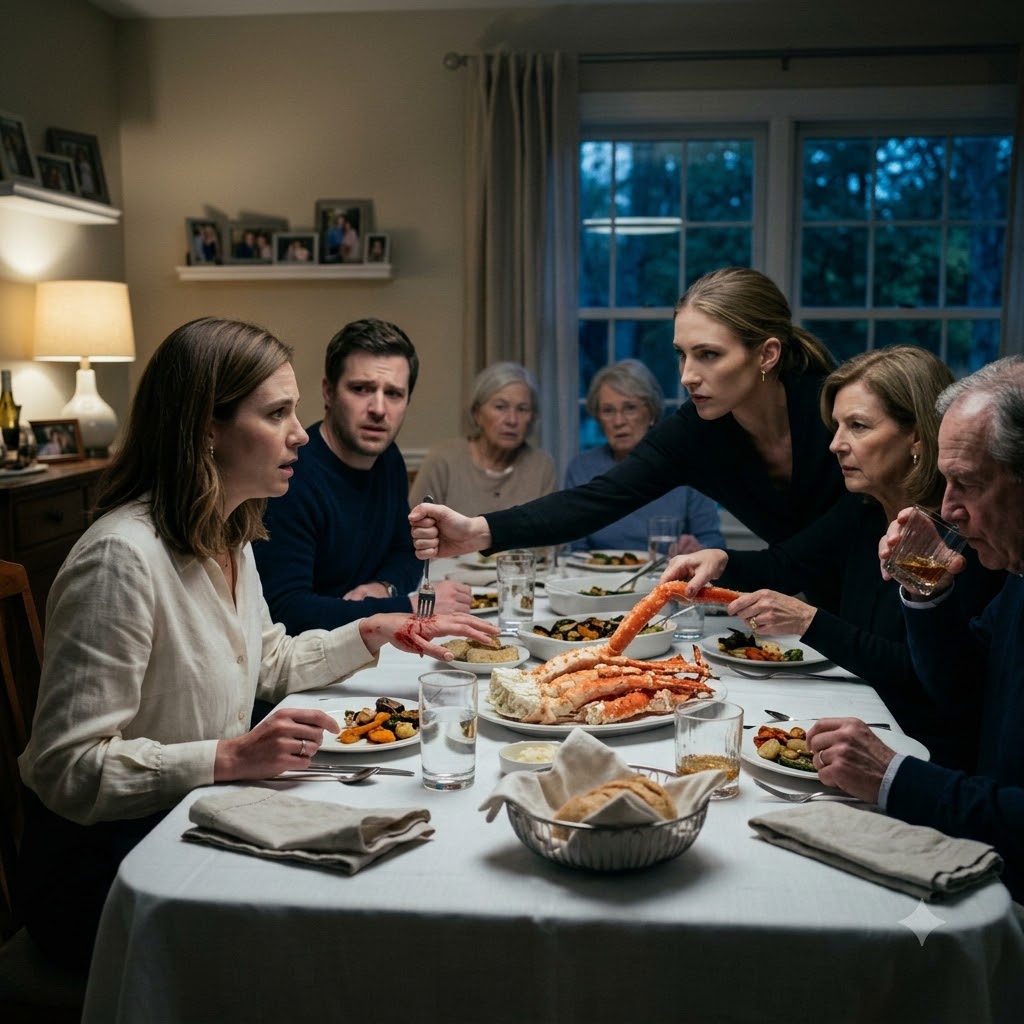
By Monday my financial adviser had heard the tapes. By Tuesday my estate attorney had drafted new documents. By Wednesday a geriatric psychiatrist signed a report confirming I was fully competent. By Friday evening Axel’s birthday cake sat on my dining room table, and the three people who had planned to bury me alive were sitting in my house with forks in their hands.
Livia smiled too brightly. Quentyn asked how my money meeting had gone. Axel stared toward the hallway, waiting for the gift he thought would buy his dream car. I cut the cake slowly, wiped the knife clean, and set my recorder beside the candles.
Then I pressed play.
( End of Part 1 )
Read Part 2 of the story in the first comment below 👇👇👇
Quentyn’s voice filled the dining room first—smooth, cold, explaining how they could “encourage” me into assisted living and then claim I was no longer competent to handle my own accounts. Livia’s smile vanished before the first sentence finished. Axel’s fork hovered above his cake. For once the boy who always had an answer did not even blink.
I let the recorder run long enough for them to hear themselves talk about my life like it was an old car they could trade in. Then I stopped it and placed a manila envelope on the table.
Inside were copies of the recordings, the doctor’s report, the trust papers, and the new will that removed every relative who had mistaken my kindness for weakness.
Livia whispered that I had misunderstood. Quentyn tried to stand and use his business voice, but his hand slipped on the tablecloth. I told them the monthly support ended that night. A professional guardian would step in if I ever needed help. The rest of my estate would go to charities that fed children instead of adults who waited for widows to die.
That was when Axel finally spoke. He did not apologize. He pointed at the envelope and said, “You can’t do this. That’s supposed to be ours.”
I picked up the second recording—the one from my kitchen—and his face changed before I even pressed play. His own voice filled the room: “You’re nothing to us but the estate, Grandma. Die already so we can split it.”
Axel’s hand jerked and knocked over his water glass. A dark wave spread across the white tablecloth, soaking the slice of chocolate cake I had cut for him. Nobody reached for a napkin.
“Turn it off,” Livia choked, her face flushed with sudden, ugly shame. “Please. Turn it off.”
I pressed stop. The silence that returned was heavy and absolute.
“That was Tuesday,” I said softly. “While the butter was melting in the pan. The same pan I used to make your breakfast every Saturday after your grandfather died.”
Axel stared at his ruined cake, jaw working. The cool, bored mask he had worn for two years crumbled.
“You listened to us,” Quentyn said, panic turning sharp. “You set us up. You brought us into your home and recorded us like a criminal case. Is this what Harold taught you? To spy on your own family?”
“Harold taught me to protect what we built,” I answered, looking him dead in the eye. “And Harold loved a family that loved him back. You are not that family.”
Livia sobbed that Axel was just a boy who repeated things he heard, that he was stressed about college. I corrected her gently: “He is seventeen years and three hundred sixty-four days old. At midnight he becomes an adult in the eyes of the law. Tonight he learned the cost of his words.”
Quentyn snatched the envelope and tore through the papers looking for a loophole. There was none. Every trust was revoked. Every power of attorney dissolved. My attorney was the same ruthless estate specialist Harold had trusted for thirty years.
When Quentyn threatened to contest the will and sue, I told him calmly that if he filed a single motion my attorney had instructions to release both recordings to his firm’s ethics board—and to the school board where Livia worked as a counselor. The color drained from his face.
They did not finish the cake. Within ten minutes Quentyn was packing coats in silence. Livia lingered in the doorway, eyes full of bitter sorrow—not for losing me, but for losing the financial cushion that had saved them from their own choices for years.
“You’re throwing us away,” she whispered.
“I didn’t throw you away,” I said, standing by the fireplace with Harold’s old pocket watch in my hands. “I left the door open for five years waiting for a daughter who wanted to visit her mother, not a bank. You threw yourselves away the moment you decided my life was an obstacle to your comfort.”
She walked out. Quentyn followed, shoulders hunched.
Only Axel remained at the table. The boy who had strutted through my living room like he owned the walls now looked small in the oversized designer shirt I had bought him for Christmas.
“Are you really taking away my college fund?” he asked, voice cracking.
“The money in that trust was created by your grandfather,” I said. “He worked sixty-hour weeks in a steel mill so his children and grandchildren wouldn’t have to. He gave it with love. But you told me I was nothing but a dead woman holding a checkbook.”
He wiped his face with his sleeve. “What am I supposed to do now?”
“You’re going to grow up,” I told him. “Get a job. Apply for financial aid. Learn what an hour of hard work feels like. And maybe—just maybe—you’ll learn to respect the people who give you a roof.”
I set a small velvet box next to his plate. Inside was Harold’s silver compass, the one he had promised Axel when he came of age.
“Happy eighteenth birthday,” I said. “I don’t want your money. I wanted your love. Since you couldn’t give me that, I will settle for your respect.”
Axel stared at the compass a long time. He did not yell. He did not fight. He picked up the box, stood, and walked out into the cold night, leaving the front door open behind him.
The house was quiet again. I did not clean up right away. I walked out to the porch swing Harold and I had built in our second year of marriage and sat down. The wood creaked under my weight, steady and familiar.
Down the driveway the taillights of Quentyn’s car flickered once and disappeared. The monthly checks were gone. The illusion of a happy family was gone.
I took out the little recorder, held it for a moment, and pressed delete. The whispers, the complaints, the cold words vanished. I no longer needed proof of their betrayal to justify my freedom.
The next morning sunlight poured through the oak trees across the kitchen floor. The smell of burnt pancakes was gone. My financial adviser confirmed the new trust was finalized. The local children’s shelter and community library would receive everything. They would build classrooms, buy books, and feed kids who had nothing.
A team from the garden center helped me clear Harold’s overgrown flowerbeds. By noon we were planting fresh roses—red, yellow, and white—along the front fence. I spent the afternoon drinking tea from Harold’s favorite mug.
For the first time since my husband died, the silence in the house did not feel empty. It felt like space. Space to breathe. Space to live without waiting for permission from people who only loved my shadow.
They thought they were planning my funeral. But as I watched the breeze move through the trees in my yard, knowing every square inch belonged to me and my peace, I smiled.
They had come to divide an estate. All they left behind was a woman who had finally remembered how to live.