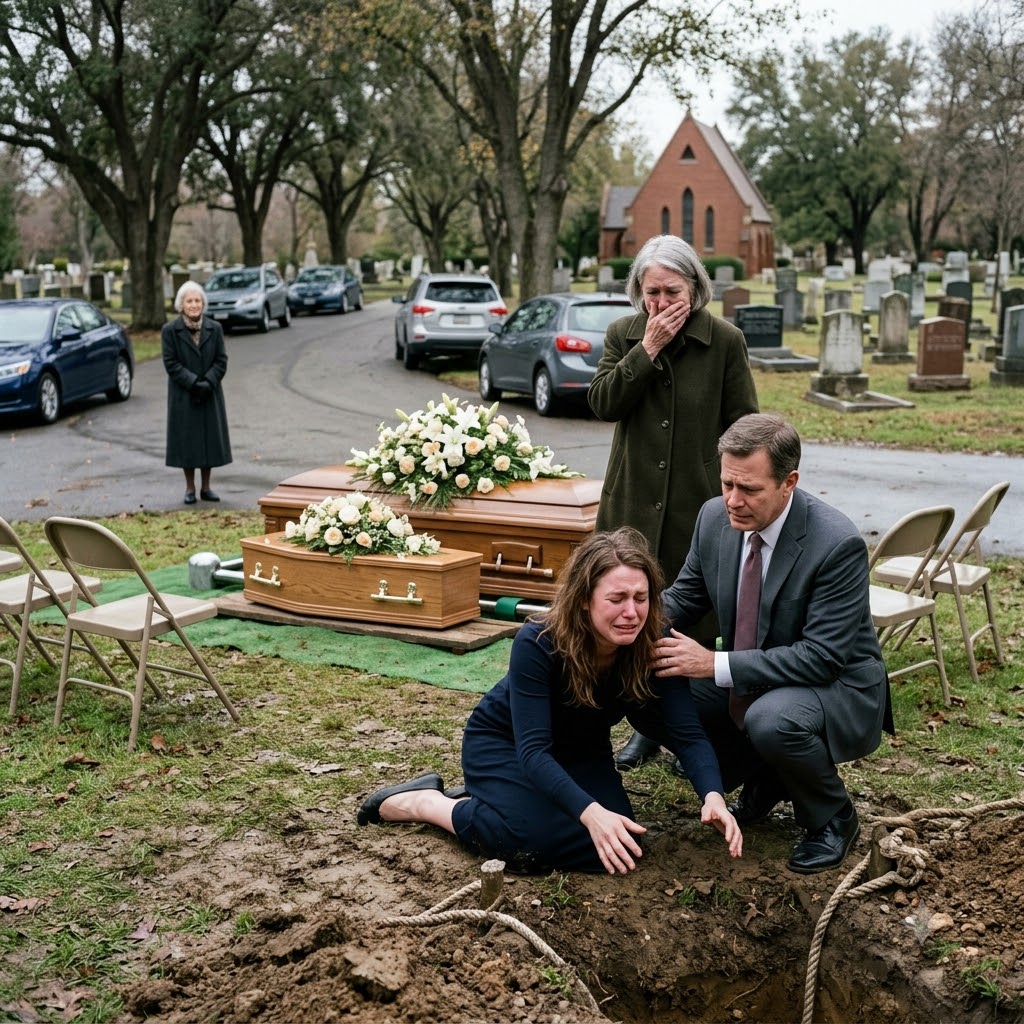
Two Weeks After My Husband’s Funeral, His Family Brought a Realtor to Throw Me Out of Our Home—His Mother Sneered, “You Were Only His Wife.” I Let Them Hand Me the Listing Papers, Then Smiled: “You’re Too Late.” When They Discovered What My Husband Changed Before He Died, Their Faces Turned WHITE… Because the House Wasn’t What They Were Really Afraid of
Part 1: The House They Tried to Take After He Was Gone
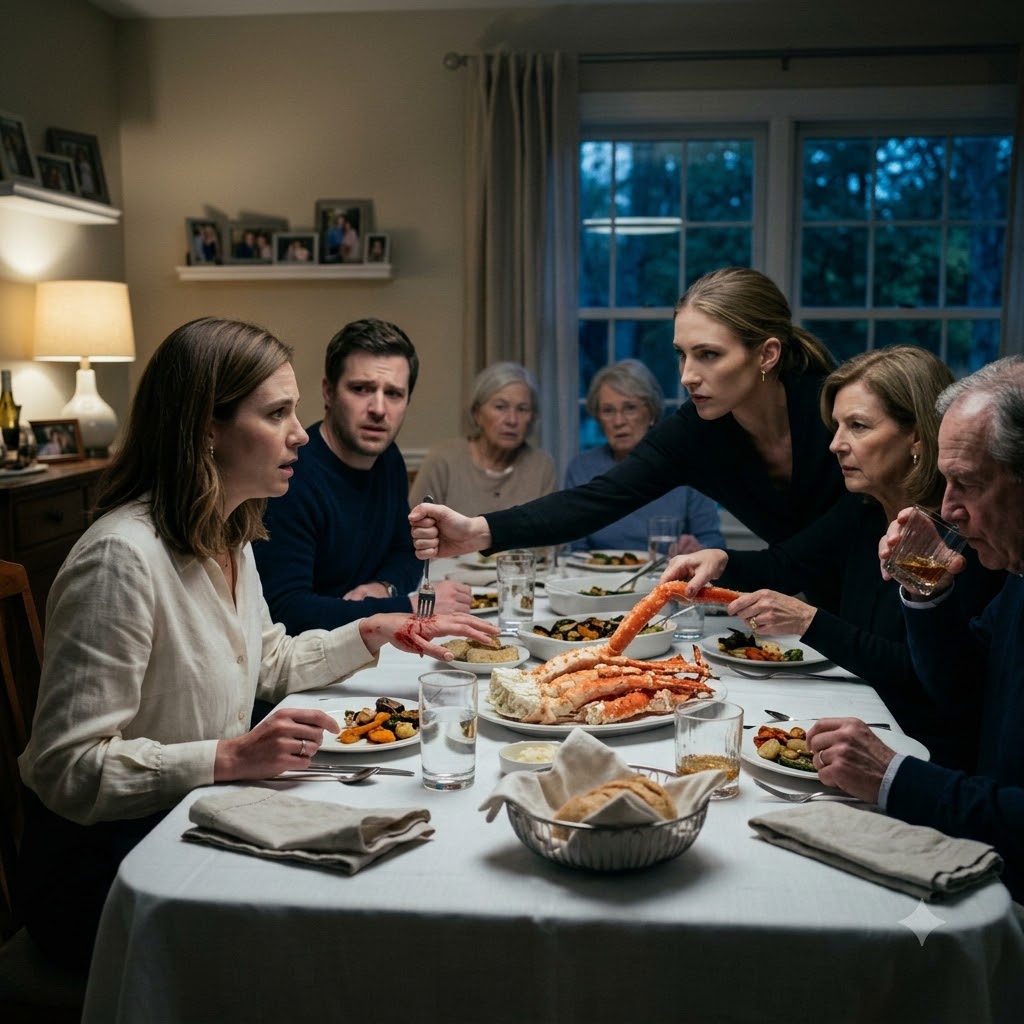
Two weeks after my husband’s funeral, his brother walked into my living room with a realtor and told me I had thirty days to leave.
I was still wearing Caleb’s wedding band on a chain beneath my sweater. His mother stood behind her son in a black coat, but her expression held none of the sorrow I expected from someone who had just buried her child.
“This house belongs to Caleb’s family,” she said. “You were only his wife.”
Only his wife.
I looked around the pale green house Caleb and I had rebuilt room by room during the first years of our marriage. The hallway still smelled faintly of the pine candles he loved, and his work boots remained by the back door because I had not been able to move them.
On the mantel was the last photograph we took at the cottage by the lake. He had one arm around my shoulders, and I was laughing at something I could no longer remember.
No one had asked whether I was sleeping.
No one had asked whether I was eating.
They had brought contracts.
My brother-in-law, Grant, spread a stack of documents over my coffee table. “Mom and I spoke with an agent. The market is good, and this place will sell quickly. You can find an apartment once it closes.”
“I already have a home,” I said.
Grant smiled as if he were explaining something obvious. “You lived here because Caleb wanted you to. He is gone now.”
His wife, Elise, entered from the kitchen holding a tablet. “Try not to turn this into an emotional scene, Claire. Caleb would want his mother taken care of.”
That was their favorite sentence.
Caleb would want.
Caleb would want me to ignore Grant’s unpaid loans. Caleb would want his mother to keep the jewelry she had “borrowed” and never returned. Caleb would want his brother to continue using his truck, even though three years had passed since Grant promised to give it back.
They spoke for him constantly after he died.
They had barely listened while he was alive.
During the final weeks of his illness, when every sentence cost him effort, Caleb asked me for one promise.
“Do not let them turn my death into a business opportunity.”
I had promised him I would not.
That morning, I let Grant keep talking. I did not mention the private beneficiary account Caleb had left in my name, worth more than three hundred thousand dollars.
I did not mention the lake cottage he had transferred entirely to me before his last treatment.
And I did not mention that, three days after the funeral, I had already moved our most important belongings out of this house.
His letters. My grandfather’s savings bonds. The deed. The life we had built that could not be boxed up by people who saw grief as an opening.
Grant pushed a listing agreement toward me.
“Sign it,” he said. “We can keep this simple.”
For the first time that day, I smiled.
“You are too late,” I said.
His mother frowned. “Too late for what?”
I reached for my purse.
“To sell a house I no longer own by myself.”
Elise looked up from her tablet. “What does that mean?”
“It means Caleb changed the title before he died,” I said. “The paperwork was notarized.”
Grant’s face tightened. “That is impossible.”
“No,” I told him. “It was planned.”
His mother grabbed the documents from the table. “Caleb would never make a decision like that without discussing it with me.”
I looked at her for a long moment.
“He made many decisions without you after you called his treatment a waste of money.”
The room fell silent.
Then Grant pointed toward the photograph on the mantel.
“What about the lake cottage?” he asked.
And the fear that crossed his mother’s face told me it was never this house they had come for.
Part 2: The Cottage They Thought Was Theirs
Grant’s question changed the room.
The house mattered to them because it was worth money. But the cottage by the lake carried something else: family history, old photographs, and the story they liked telling about how Caleb’s grandfather built it by hand.
Grant had already told friends he planned to turn it into a vacation rental.
“You cannot keep the cottage,” he said. “That was always meant to stay with the family.”
I opened my purse and took out the second document Caleb had signed before his surgery.
“Caleb transferred it to me four months ago,” I said.
His mother took a step back. “You took advantage of him while he was sick.”
“No,” I said. “He gave it to the person who drove him to treatments while you called the bills a waste.”
Her face turned red.
“I was scared,” she said.
“You were cruel.”
Grant hit the coffee table with the flat of his hand. “We will challenge this.”
“You can,” I replied. “But you will need to explain why you are challenging decisions Caleb made with a lawyer, a notary, and two medical witnesses present.”
Elise looked at her husband. “You told me there was no paperwork.”
“I thought there was not,” Grant said.
But I saw the truth in his face.
He had not believed Caleb would protect me. He had believed grief would make me too exhausted to understand what they were doing.
The doorbell rang.
Outside stood my attorney, Nathan Cole, carrying a dark folder beneath one arm. Caleb had hired him months earlier, after realizing his family had begun treating every hospital visit like an opportunity to ask about property and money.
Nathan entered without hesitation. He had expected them to come.
He placed a small recorder on the coffee table and pressed play.
Caleb’s voice filled the room.
“If my mother or Grant pressures Claire after I am gone, release this statement.”
For a second, I stopped breathing.
“The house is hers,” Caleb continued. “The cottage is hers. The beneficiary account is hers. I made these decisions clearly and willingly because my wife gave me peace while my relatives gave me bills and demands.”
His mother sat down slowly.
Grant whispered, “He was ill. He did not mean that.”
Nathan opened the folder and placed a competency letter beside the recorder. “His physician, a notary, and two independent witnesses say otherwise.”
Then Nathan handed Grant another notice.
“It also outlines a loan your brother made to you,” he said. “Eighty-six thousand dollars, none of it repaid.”
Grant stopped talking.
The letter explained that if they interfered with the trust, listed either property, or pressured me to sell, Caleb’s estate would pursue repayment of the loan. The money was documented through bank transfers, messages, and a signed acknowledgment Grant had apparently forgotten existed.
His mother began to cry.
Not for Caleb.
Not for me.
She cried over the cottage, the money, and the future she had assumed she could collect from her son’s death.
I walked to the front door and opened it.
“This is my home,” I said. “And none of you are welcome in it.”
They left without an apology.
Three weeks later, I moved to the lakeside cottage. Caleb and I had planned to spend our retirement there someday, and I could not bear the thought of Grant turning it into a rental for strangers.
I planted lavender beside the steps and hung Caleb’s fishing hat near the kitchen door.
The house in town was rented to a pediatric nurse and her little boy. The beneficiary account remained protected, exactly as Caleb intended.
One evening, Nathan called with news.
“Grant has stopped making threats,” he said. “But there is something you should see.”
“What is it?”
“A letter Caleb wrote the night before he signed the trust.”
Part 3: The Letter He Wrote for Me
Nathan brought Caleb’s letter to the cottage the next morning.
I sat at the kitchen table with both hands around a mug of coffee while the lake moved quietly beyond the window. For several minutes, I could not open the envelope.
The handwriting on the front was unmistakably his.
For Claire, if I am not there to say this myself.
Inside, Caleb explained why he had changed the trust.
He wrote that his mother and Grant had begun asking questions about his property before his doctors had even discussed the final prognosis. Grant wanted the cottage for a rental business. His mother wanted access to the beneficiary account “to protect the family.”
Caleb had told them no.
“They called you temporary,” he wrote. “But you were the only person who stayed when staying became difficult.”
My vision blurred as I read on.
He had listed the things I remembered doing without complaint: driving him to every appointment, managing medication schedules, sleeping in the hospital chair when he was too sick to be alone, and shielding him from conversations about money when he had barely enough strength to speak.
At the bottom, he had added one final sentence.
They will use grief to make you doubt yourself. Do not let them.
I folded the letter carefully and held it against my chest.
Nathan sat across from me, quiet until I was ready to speak.
“He knew they would come,” I said.
“Yes,” Nathan replied. “That is why he made every document so clear.”
He then showed me another folder Caleb had prepared. It contained copies of the loan agreements with Grant, bank records, and several messages sent by Caleb’s mother.
In one message, she asked Caleb whether he had “updated his paperwork properly.” In another, Grant wrote that it would be smarter to sell the house and cottage quickly “before Claire starts making claims.”
The messages had been sent while Caleb was still alive.
They were already planning around my loss before it was even mine.
For the next week, Grant avoided me. His one legal threat disappeared after Nathan responded with the trust documents, the competency records, and the outstanding loan file.
But his mother did not give up quietly.
She sent flowers to the cottage with a card that read, A mother should not lose her son and his home.
Then she called from unknown numbers. When I did not answer, she left messages saying Caleb would be disappointed in me.
That was the most painful part.
They had used his name for years to justify whatever they wanted. Now they were using it to try to pull me back into the same pattern.
One afternoon, I found his mother standing at the end of the cottage driveway.
She wore dark sunglasses and held a small overnight bag.
“I only want to see the place,” she said. “It is part of my family’s history.”
“It was,” I answered. “Now it is part of mine.”
Her mouth tightened. “You cannot erase us.”
“I am not trying to erase you. I am asking you to respect the decisions Caleb made.”
“You manipulated him.”
I looked at her calmly. “You asked about his inheritance while he was in treatment.”
She lowered her glasses, and for a moment, her grief looked real.
“I was afraid,” she whispered.
“I was too,” I said. “The difference is that I was afraid of losing him.”
She left without another word.
That evening, Nathan called again.
“Grant has hired an attorney,” he said.
I closed my eyes. “For the trust?”
“Yes. He is claiming Caleb was pressured when he signed it.”
I looked at the letter on my table, then at the lake Caleb had loved.
“Then let him try,” I said.
Part 4: The Hearing They Could Not Control
Grant’s attorney filed the challenge three weeks later.
The petition claimed Caleb had been too ill to understand the trust and that I had pressured him into transferring the house, the cottage, and the beneficiary account. Reading it hurt, not because I doubted the evidence, but because it turned the final months of my husband’s life into another thing his family wanted to take from me.
Nathan prepared quietly.
He gathered Caleb’s medical competency letters, the notarized transfers, witness statements, the video recording, and the messages showing that Grant and his mother had discussed selling the properties before Caleb died. He also found the signed loan agreement documenting the money Grant still owed.
When we entered the hearing room, Grant avoided my eyes.
His mother sat behind him, dressed in black again. I wondered whether she owned any other color or simply believed mourning clothes made cruelty look like grief.
Grant’s attorney argued that Caleb’s illness had made him vulnerable. He described me as the person with the most access to him and suggested that access had become influence.
Nathan stood when it was his turn.
“Yes,” he said. “Claire had access to Caleb. She took him to appointments, made sure he ate, handled his medication schedule, and sat beside him when he was afraid.”
Then he placed the competency letters before the judge.
“But Caleb also had a physician who documented his capacity, an independent attorney who explained each document, a notary, and two witnesses. He made these decisions over several weeks, not in one confused afternoon.”
Grant’s attorney shifted uncomfortably.
Nathan played Caleb’s recorded statement.
The room became silent as Caleb’s voice filled the speaker.
“My wife deserves to live without being treated like an obstacle between my family and my belongings.”
His mother covered her mouth.
Then Nathan displayed the messages.
One from Grant: If he changes the paperwork, we need to know before Claire starts claiming everything.
Another from his mother: The cottage must remain with us. She has no children with him and no reason to keep it.
I watched Grant’s face drain of color.
His attorney asked for a recess. The judge denied it.
Nathan presented the loan agreement next. Grant had borrowed $86,000 from Caleb over several years and had repaid almost none of it. The trust specifically allowed the estate to seek repayment if Grant challenged Caleb’s decisions without cause.
“That is retaliation,” Grant’s attorney argued.
“No,” Nathan said. “It is an enforceable debt that Mr. Hale hoped everyone would honor voluntarily.”
The judge reviewed the documents for several long minutes.
Then she dismissed the challenge.
The trust was valid. The house was mine. The cottage was mine. The beneficiary account was mine.
Grant was ordered to stop contacting me about the properties, and he faced repayment proceedings over the money he owed his brother.
Outside the courthouse, Caleb’s mother caught up to me.
“You won,” she said bitterly.
I looked at her.
“No,” I said. “Caleb made a choice.”
Her eyes filled with tears. “He was my son.”
“And he was my husband.”
For a second, she seemed close to saying something honest. Then her expression hardened again.
“You will be alone up there at that cottage.”
I thought of the lake, the lavender I had planted, and the letters Caleb had left in the cedar chest.
“I will be at home,” I said.
That night, Nathan sent me one final file from Caleb’s estate.
It was not a legal document.
It was a voicemail Caleb had saved from Grant years earlier.
And after I listened to it, I understood why my husband had stopped trusting his brother long before he got sick.
Part 5: The Promise I Kept for Him
The voicemail was seven years old.
Grant’s voice sounded younger, but the entitlement was already there. He told Caleb he needed another loan for a business opportunity and promised to pay it back after one successful season.
Then he laughed.
“Come on,” he said. “You do not even have kids. What else are you saving it for?”
Caleb had saved the message.
He must have known even then that Grant did not see him as a brother. He saw him as a resource.
I listened once, then placed my phone facedown on the table.
The next week, Grant agreed to a repayment arrangement through Nathan. He did not apologize. He did not need to. His silence told me he finally understood that Caleb had planned for this moment long before any of us wanted to admit it was coming.
His mother sent one final letter.
She wrote about how much she missed the cottage and how unfair it felt that she could no longer visit. She wrote that grief had made everyone say things they did not mean.
I read it beside the lake and felt sadness for her, but not guilt.
Grief could explain pain.
It could not excuse treating a widow like an obstacle between a family and a sale price.
I did not respond.
As spring arrived, I began making the cottage mine in the way Caleb had wanted. I planted lavender along the front steps and repaired the old porch swing where we used to sit with coffee before the world woke up.
His fishing hat hung beside the kitchen door. His letters stayed in the cedar chest at the foot of our bed.
The house in town was rented to a nurse named Sofia and her young son. I liked knowing that laughter had returned to rooms that had held so much silence after Caleb died.
The beneficiary account remained untouched except for a small donation I made to the hospital hospice program that had cared for him in his final days. It was not a grand gesture.
It simply felt right to give something back to the people who had treated him as a person, not an inheritance.
One warm afternoon, I sat on the porch with Caleb’s final letter folded in my lap. I read the last paragraph again.
If they come for what we built, remember this: love is not proved by what someone can take from you. It is proved by who stays when there is nothing left to gain.
Tears came then, but they were different from the tears I cried after the funeral.
Those tears had been full of fear.
These were full of gratitude.
I had kept my promise.
I did not let his mother take the cottage. I did not let Grant sell the house. I did not let anyone turn Caleb’s death into a reward for people who had treated his life like a balance sheet.
People called me cold because I refused to give in.
They were wrong.
I was a wife honoring the man who trusted me most when he had the least time left.
As the sun lowered over the lake, I touched the wedding band still hanging from its chain around my neck.
Then I went inside, closed the door, and felt the quiet settle around me.
Not empty.
Safe.